
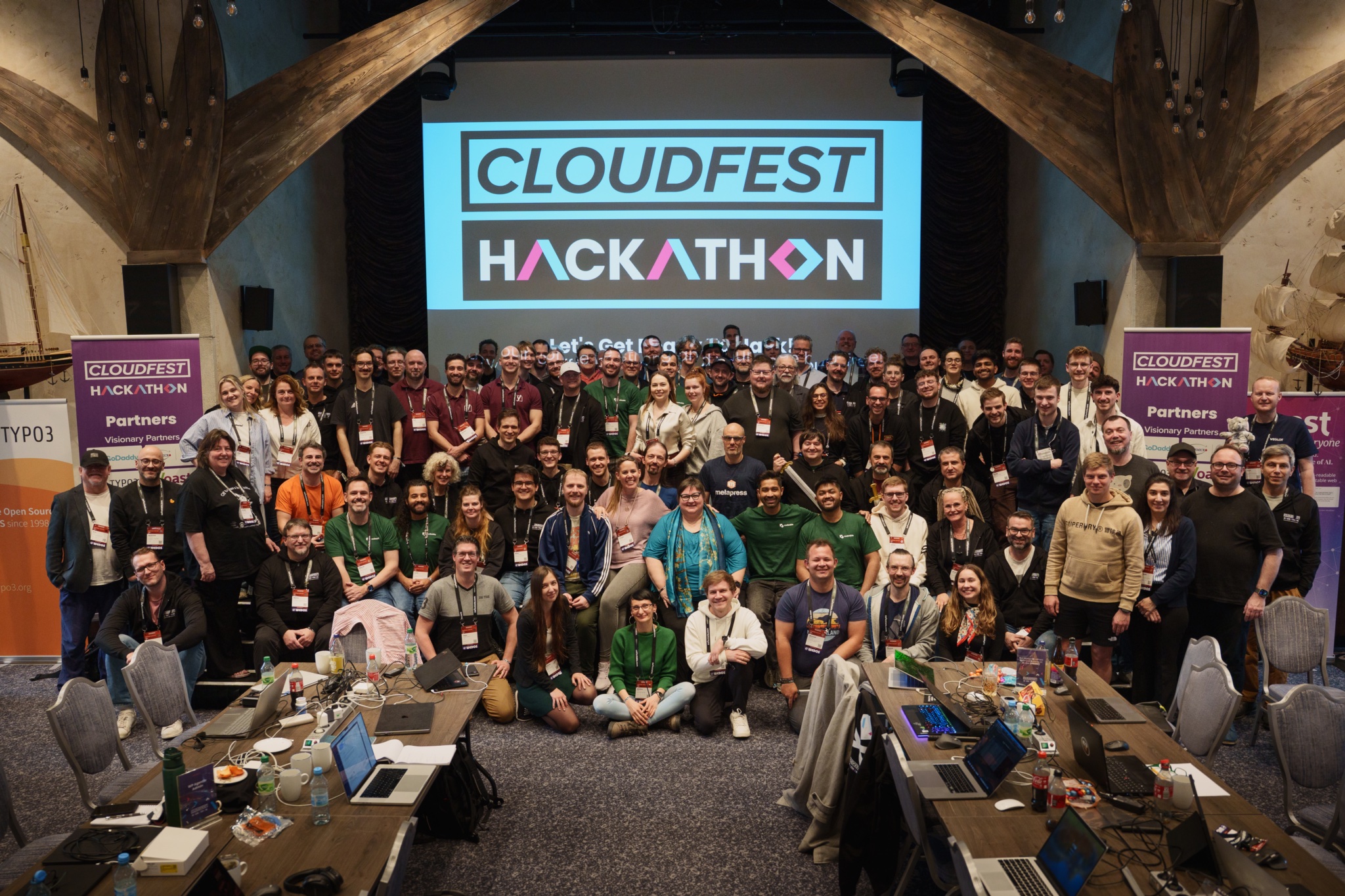
When I look back on CloudFest 2026, it is the Hackathon that stays with me most. CloudFest as a whole is a great event with many good conversations, inspiring people, and a very special atmosphere. But for me, the Hackathon is the real reason why I always enjoy coming back.
This year was my third time at the CloudFest Hackathon, and once again it showed why I enjoy this format so much. In a very short time, people from very different backgrounds come together, bring in their perspectives, and work on ideas that are not only discussed but actually put into practice. That is exactly what makes it so appealing to me.
One of the most exciting projects for me this year was the Website Responsibility Scanner, or WRS for short. I think the idea behind it is strong because it addresses a real problem while also being intentionally approachable. Right now, it includes two first modules: Accessibility and Sustainability. At the same time, it is already clear that this is only the beginning. Later on, other areas could be added as well, such as SEO, privacy, and more.
The vision behind it is as simple as it is useful. In the best case, you simply paste in a URL and get a clear overview of where a website could be improved. That can help identify issues and opportunities more quickly and make the whole topic easier to approach.
What matters just as much, though, is what a tool like this cannot do. It can provide hints, highlight issues, and offer an initial orientation. But it does not replace expertise, experience, or the sense for what is truly useful for the people behind a website and, above all, for its users. That is exactly why this approach works so well for me. WRS is not meant to be a final judgment, but a helpful starting point.
It also fits very well that the project is Open Source and can be self-hosted if needed. I think that is especially important. It means these tests can be run anytime and as often as it makes sense, without artificial limits and without immediately being pushed into a paid model. For a project like this, that feels like exactly the right approach to me.
It was also great to see how quickly the first ideas turned into something tangible. At the beginning of a Hackathon, a lot is still open. But step by step, ideas, decisions, and different perspectives come together until a concept becomes something you can actually use and keep building on. For me, that is always one of the most exciting parts.
Of course, something like this does not just happen on its own. Alena and Milian Hackradt from GzEvD, Gesellschaft zur Entwicklung von Dingen, led the WRS project and did an outstanding job. That was clearly visible throughout the project.
What always impresses me about the CloudFest Hackathon is the way people work together. So much of it is direct, pragmatic, and pleasantly free of unnecessary loops. It is not about taking centre stage, but about building something meaningful together. For me, that is a big part of what makes this format so special.
One thing I noticed again this time is just how valuable different perspectives are in a project like this. Topics such as Accessibility and Sustainability cannot be viewed in a meaningful way from a purely technical angle. You also need to think about clarity, people, priorities, and practical implementation. That exact interplay was very noticeable throughout the project.
For me personally, what I am taking away from these days is above all new motivation. Not because these topics are new to me, but because it was exciting to dive even deeper into them and see them again from different angles within a project like this. For me, that is one of the great values of events like this.
CloudFest Opening Event & WP Summit
The WP [Business & Agency] Summit on Monday was also a very fitting conclusion to the Hackathon for me. After those intense days, it was great to still spend some time there and widen the perspective a little towards the end. The focus was clearly more on business, exchange, and collaboration within the WordPress ecosystem, and that felt exactly right at that point.
But what really feels like a must is the extraordinary opening event on Monday evening. The atmosphere there is simply special, and that mix of event, encounters, and a bit of CloudFest madness is a big part of the appeal for me. The Lords of Uptime were a real highlight. Once you have seen them live, it quickly becomes clear why they are such a fixture at CloudFest for so many people.
In the end, what stays with me most is the feeling that the CloudFest Hackathon is a very special place for exactly these kinds of ideas. CloudFest as a whole is strong. But for me, the Hackathon is the part that really makes the difference. And that is exactly why I always enjoy coming back.
Related links
Website Responsibility Scanner
Hackathon and WP [Business & Agency] Summit photos
Roan de Vries took the pictures again and put them online. Thank you.
Leave a Reply